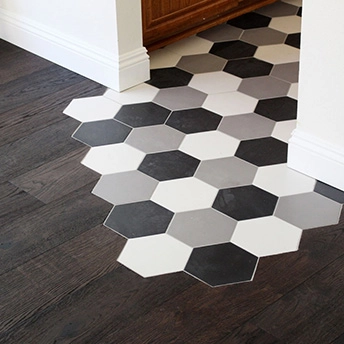
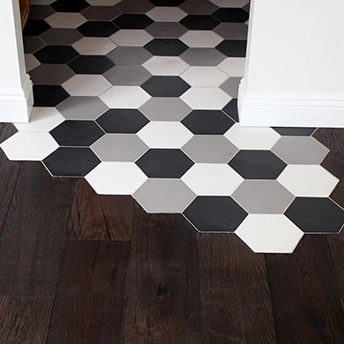
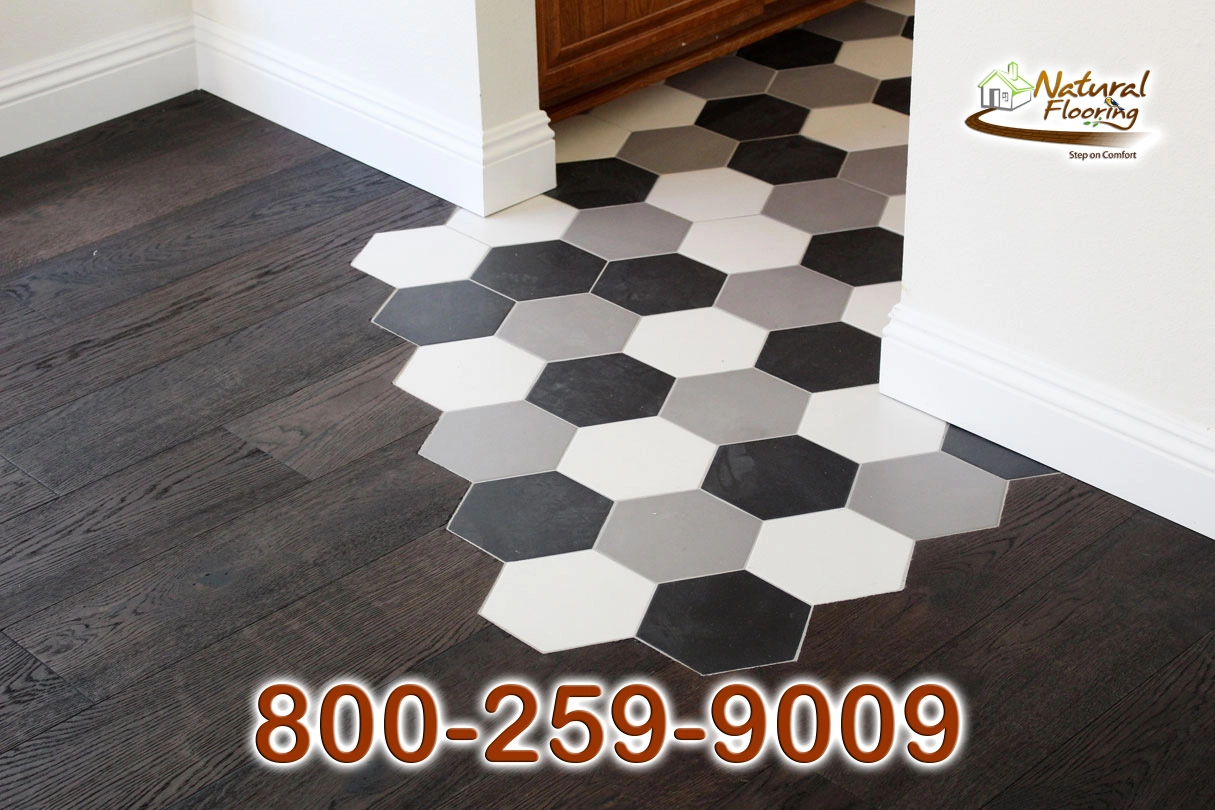
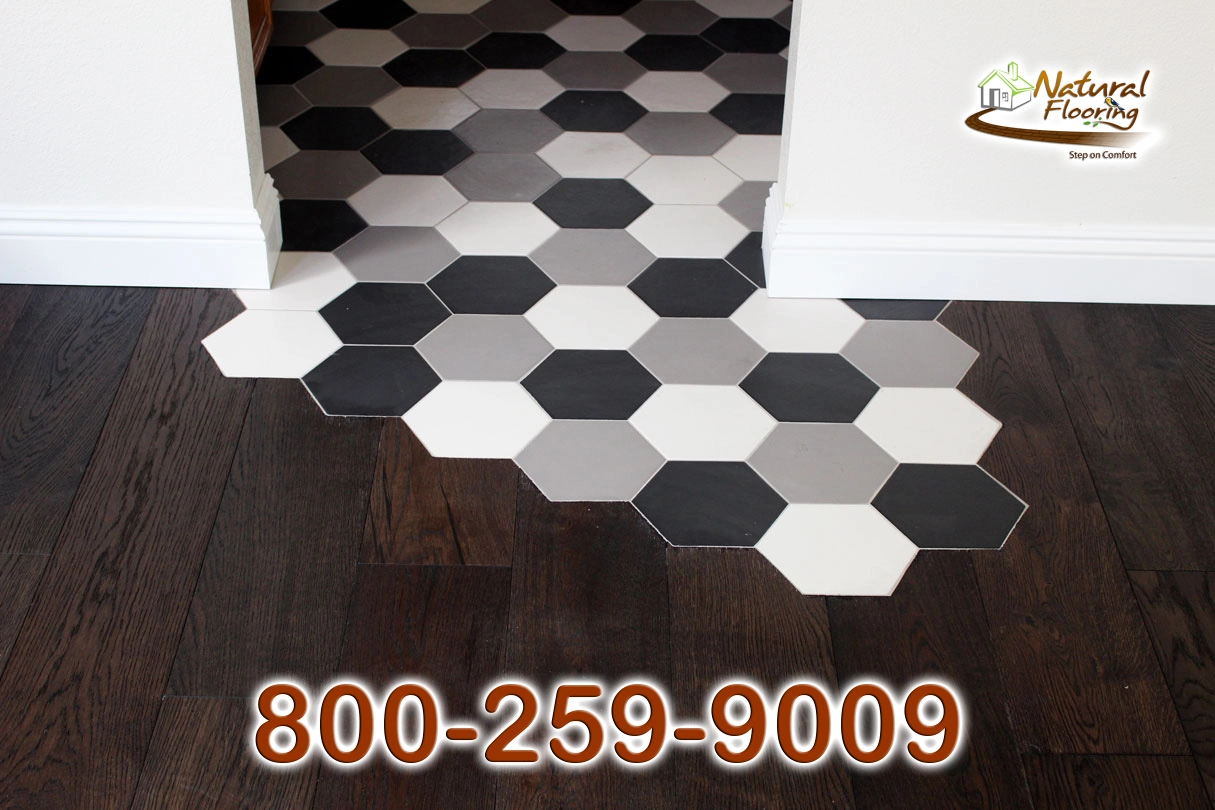
The transition between hexagon tiles and wood flooring showcases a striking and seamless integration of two distinct materials, blending geometric precision with natural wood grain. This intricate design requires a high level of craftsmanship, as each tile is carefully cut and arranged to fit perfectly into the adjoining wood planks, ensuring a fluid and organic transition without the need for traditional threshold strips. Achieving this effect demands meticulous planning and expert execution. The hexagonal tiles must be measured and cut with precision to align with the staggered edges of the wood planks, creating an interlocking appearance that enhances visual interest. The wood flooring is similarly shaped to complement the irregular tile pattern, requiring specialized cutting tools and advanced flooring installation techniques. Additionally, the height difference between materials must be accounted for, ensuring a level and smooth transition that prevents tripping hazards while maintaining durability. This type of transition is ideal for open-concept spaces, where defining different functional areas is desired without breaking the continuity of the flooring. It is a statement of both artistry and technical skill, demonstrating the perfect marriage of contemporary design and expert craftsmanship.
Category:
Transition
copied!
Designed Transition
The transition between hexagon tiles and wood flooring showcases a striking and seamless integration of two distinct materials, blending geometric precision with natural wood grain. This intricate design requires a high level of craftsmanship, as each tile is carefully cut and arranged to fit perfectly into the adjoining wood planks, ensuring a fluid and organic transition without the need for traditional threshold strips. Achieving this effect demands meticulous planning and expert execution. The hexagonal tiles must be measured and cut with precision to align with the staggered edges of the wood planks, creating an interlocking appearance that enhances visual interest. The wood flooring is similarly shaped to complement the irregular tile pattern, requiring specialized cutting tools and advanced flooring installation techniques. Additionally, the height difference between materials must be accounted for, ensuring a level and smooth transition that prevents tripping hazards while maintaining durability. This type of transition is ideal for open-concept spaces, where defining different functional areas is desired without breaking the continuity of the flooring. It is a statement of both artistry and technical skill, demonstrating the perfect marriage of contemporary design and expert craftsmanship.