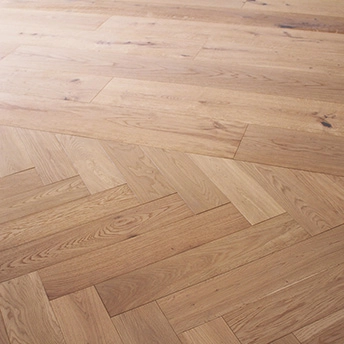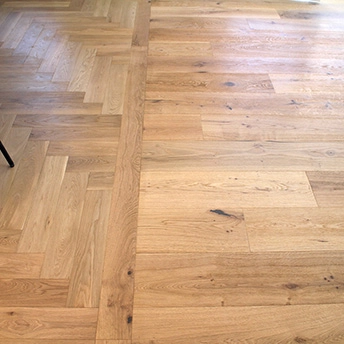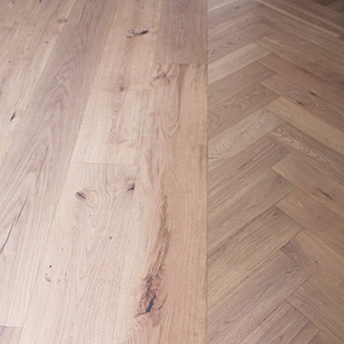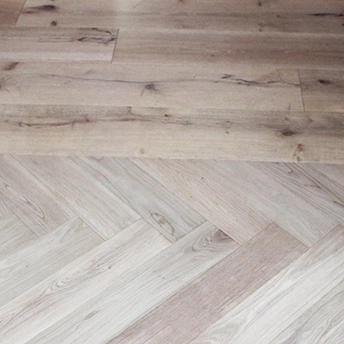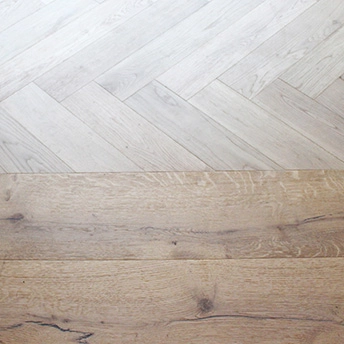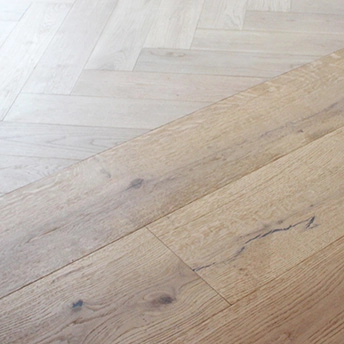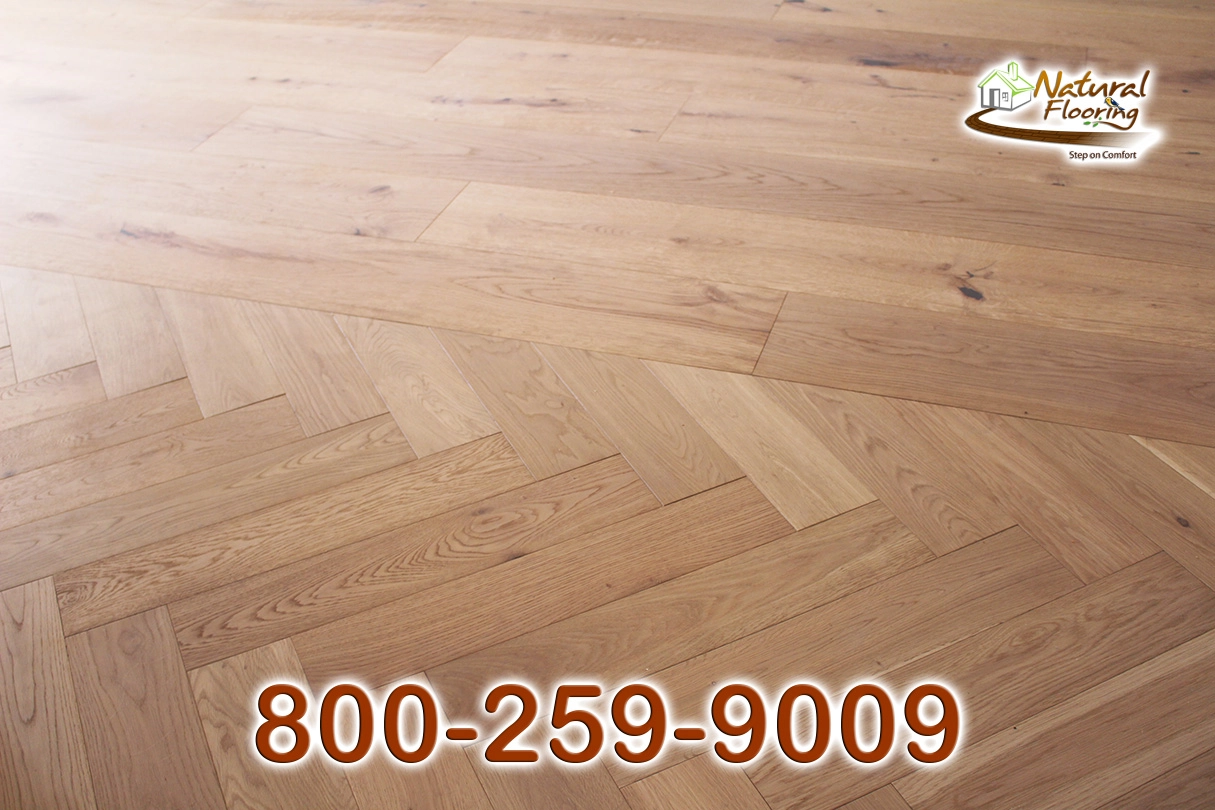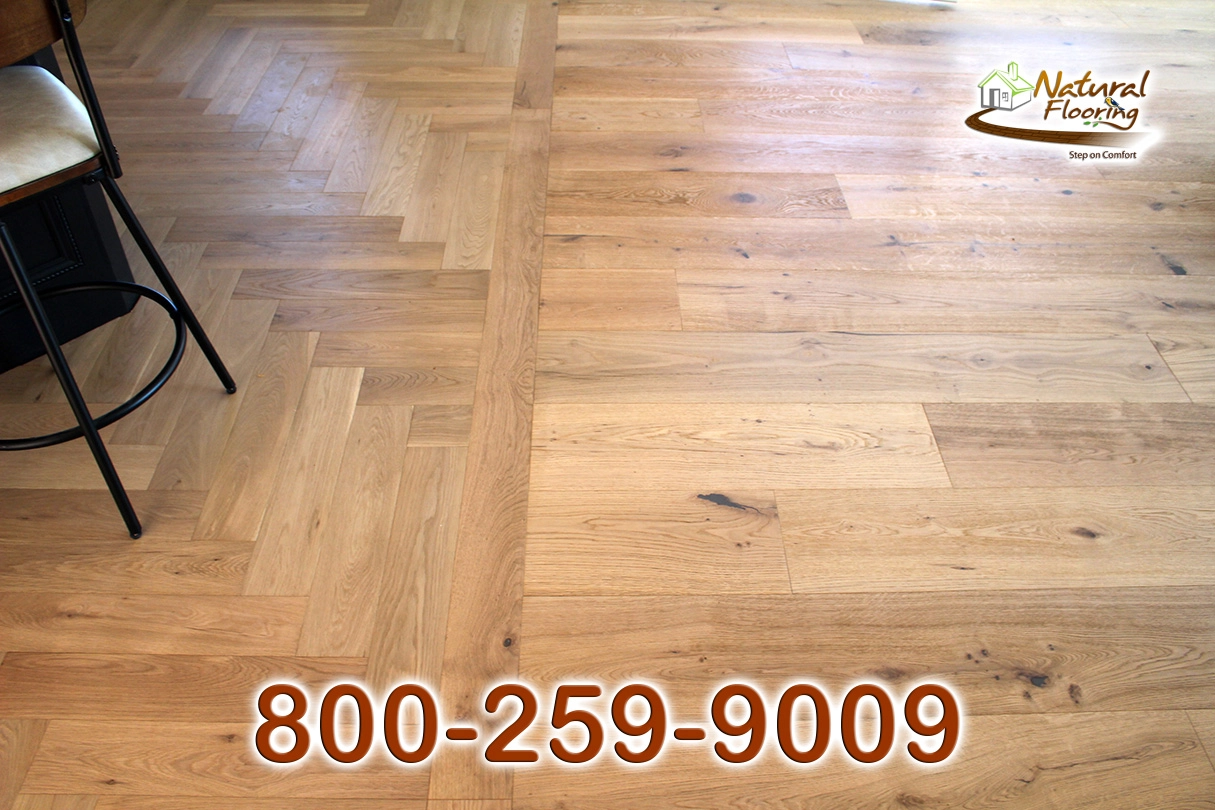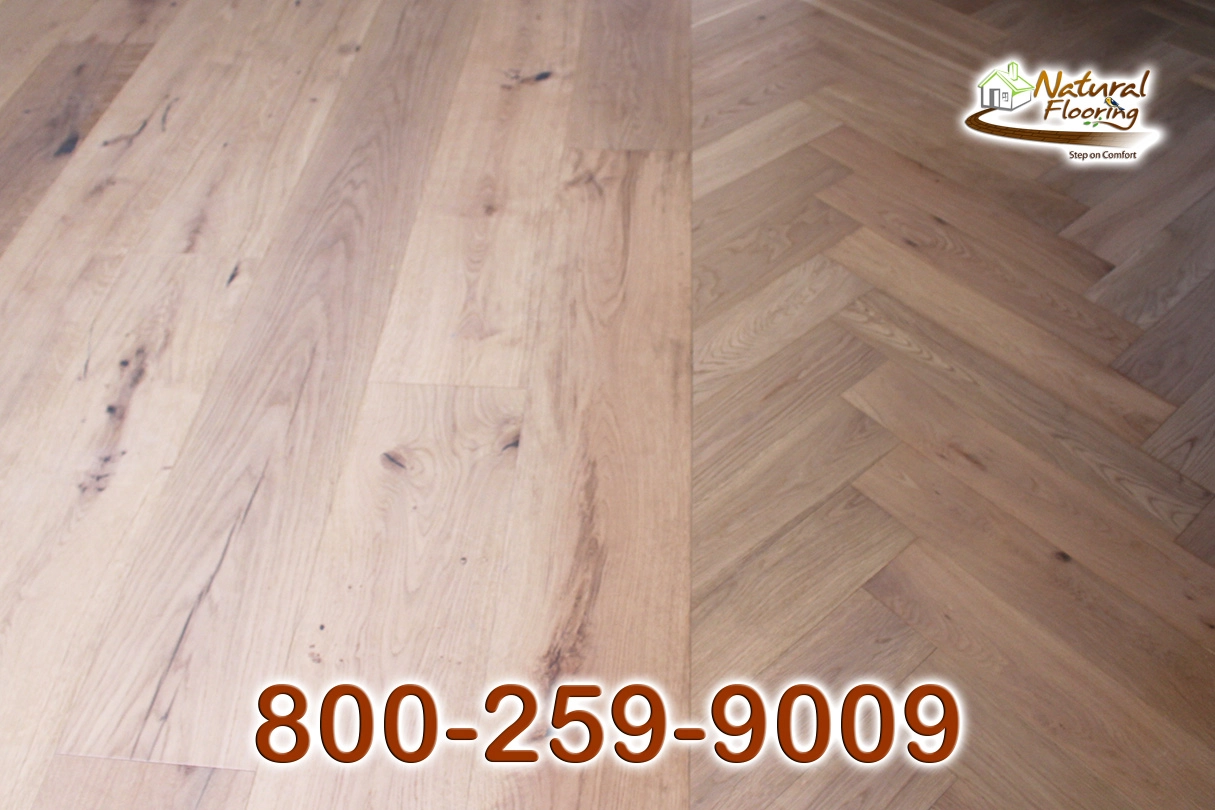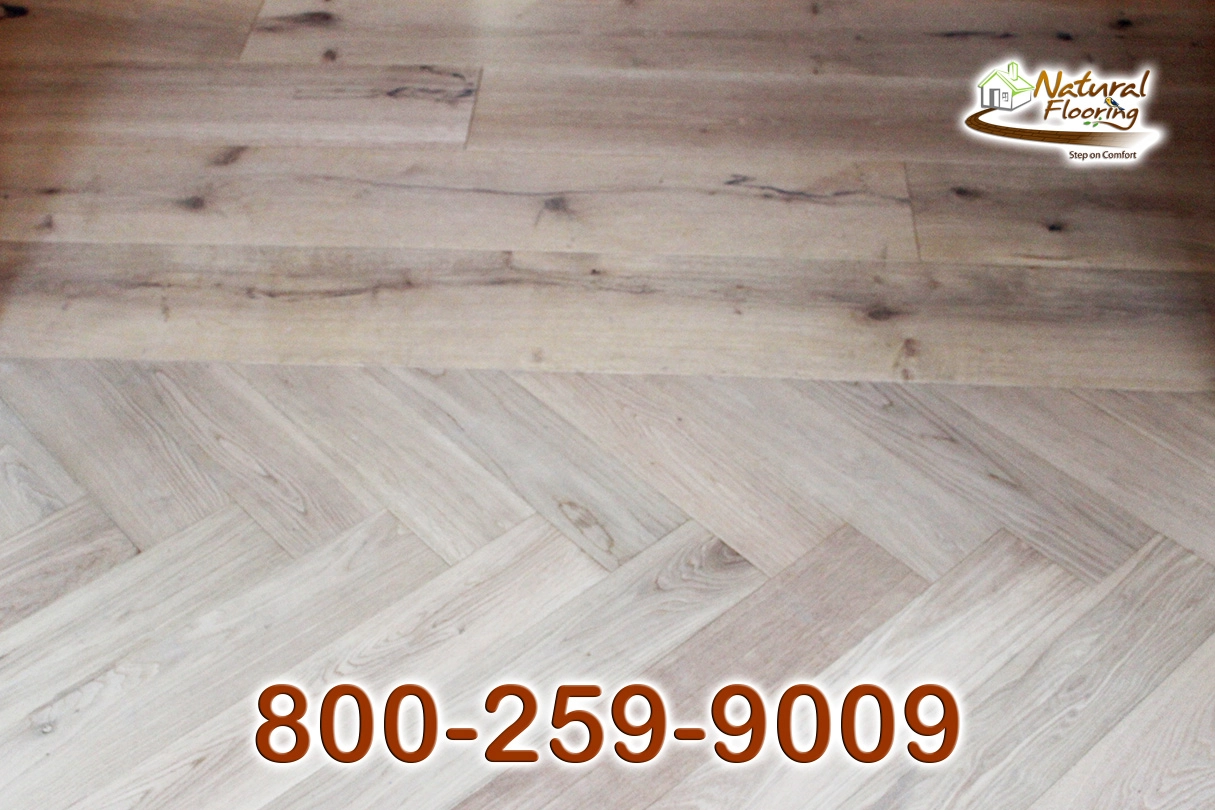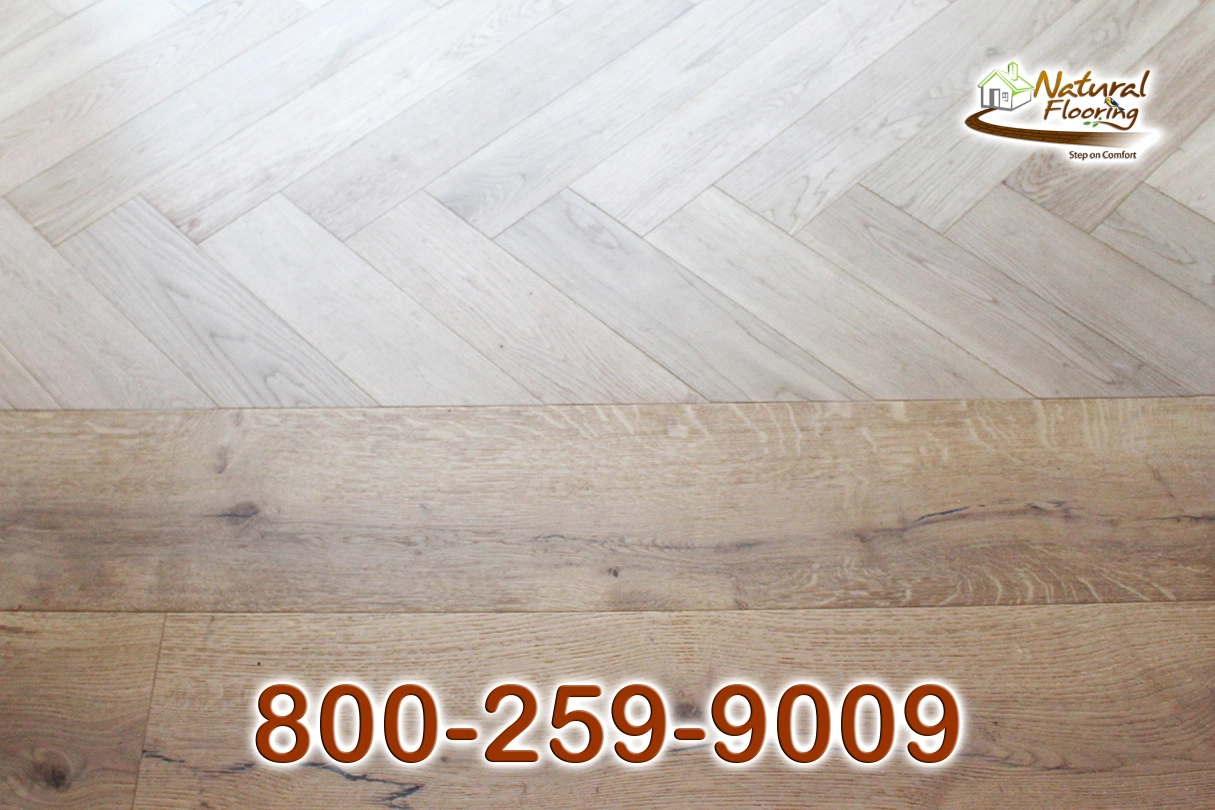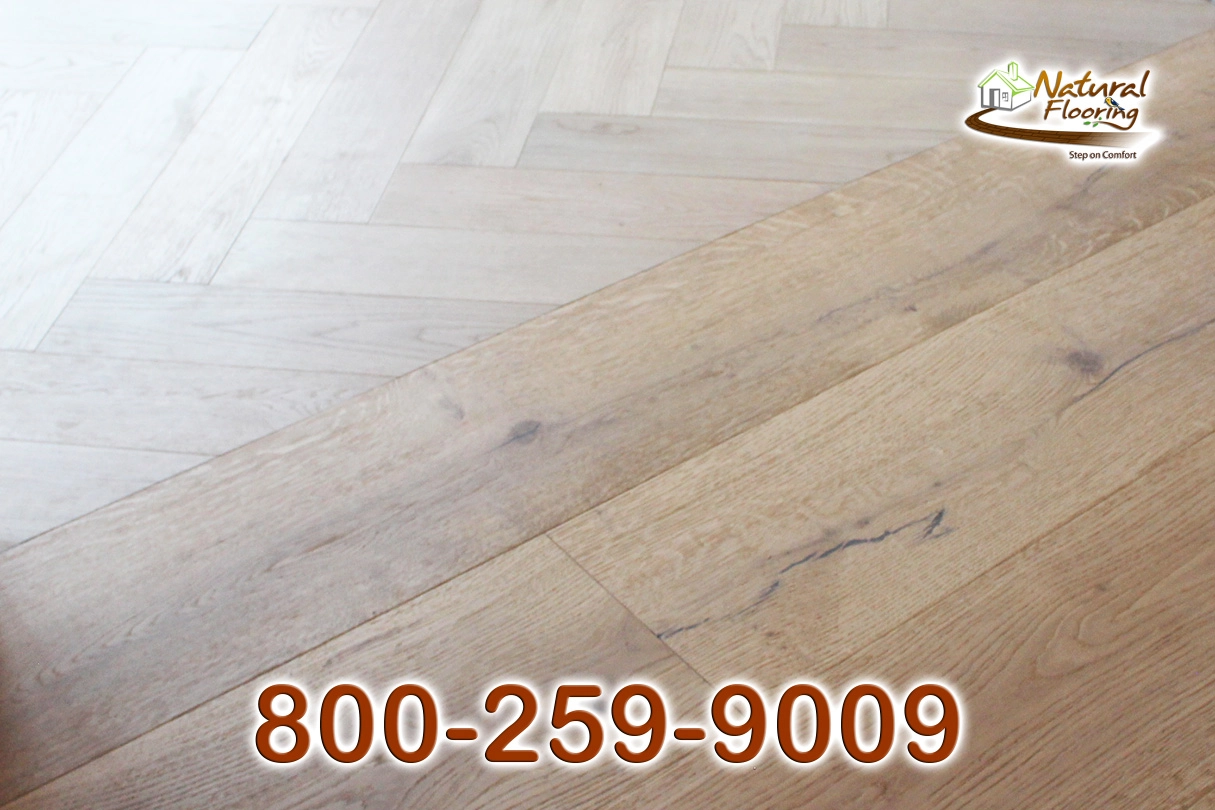
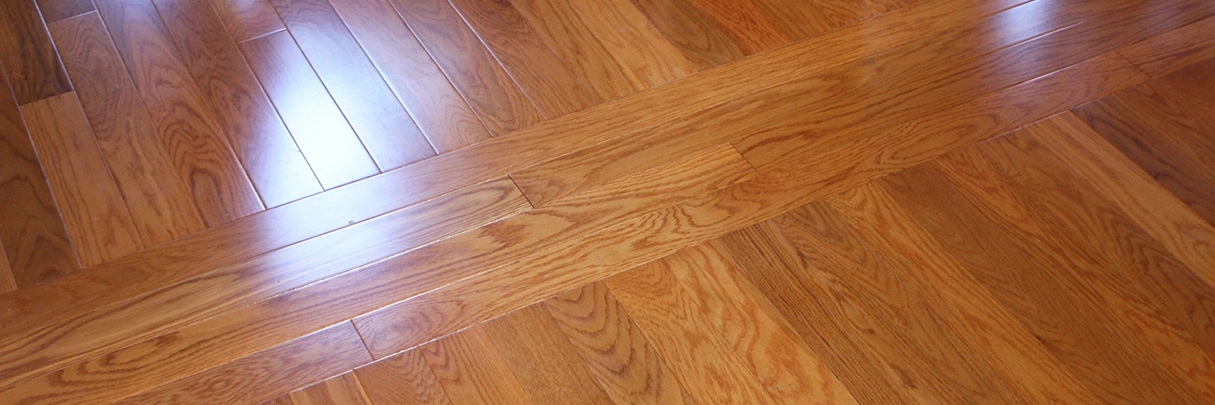
The transition between a herringbone wood floor and other flooring types, such as traditional plank wood flooring or tile, is a carefully crafted design element that enhances the aesthetic and functional flow of the space. The meeting point between these distinct flooring patterns is often framed with a border plank, seamlessly defining the shift between the intricate herringbone layout and the more linear, parallel planks. This transition creates a visual break that enhances the elegance of the flooring while maintaining consistency in color, texture, and material. In cases where a herringbone wood floor transitions to tile, a coordinating transition strip or border tile is used to harmonize the materials and create a polished finish. This helps manage differences in elevation, ensuring a smooth, safe, and visually cohesive shift from one material to the next. The use of borders, whether in wood or stone, serves as a framing detail that enhances the sophistication of both flooring styles, allowing them to coexist beautifully within the same environment. The precision of the transition, whether it be between herringbone and plank flooring or herringbone and tile, is crucial in maintaining balance within the space. The border plank or tile frame acts as a design element that not only defines each section but also helps protect the edges of the flooring materials, ensuring durability and longevity. This type of transition is commonly used in grand entryways, dining areas, and open-concept spaces, where different flooring layouts are used to subtly define separate functional areas while preserving an open, cohesive look.
Category:
Transition
copied!
Herringbone Wood Floor to Other Floor Transitions
The transition between a herringbone wood floor and other flooring types, such as traditional plank wood flooring or tile, is a carefully crafted design element that enhances the aesthetic and functional flow of the space. The meeting point between these distinct flooring patterns is often framed with a border plank, seamlessly defining the shift between the intricate herringbone layout and the more linear, parallel planks. This transition creates a visual break that enhances the elegance of the flooring while maintaining consistency in color, texture, and material. In cases where a herringbone wood floor transitions to tile, a coordinating transition strip or border tile is used to harmonize the materials and create a polished finish. This helps manage differences in elevation, ensuring a smooth, safe, and visually cohesive shift from one material to the next. The use of borders, whether in wood or stone, serves as a framing detail that enhances the sophistication of both flooring styles, allowing them to coexist beautifully within the same environment. The precision of the transition, whether it be between herringbone and plank flooring or herringbone and tile, is crucial in maintaining balance within the space. The border plank or tile frame acts as a design element that not only defines each section but also helps protect the edges of the flooring materials, ensuring durability and longevity. This type of transition is commonly used in grand entryways, dining areas, and open-concept spaces, where different flooring layouts are used to subtly define separate functional areas while preserving an open, cohesive look.