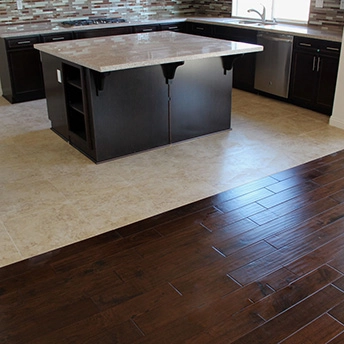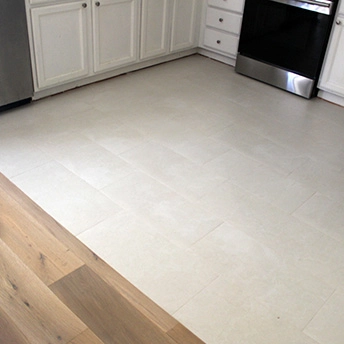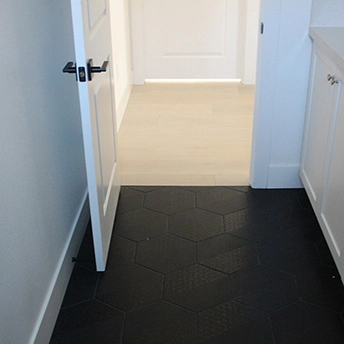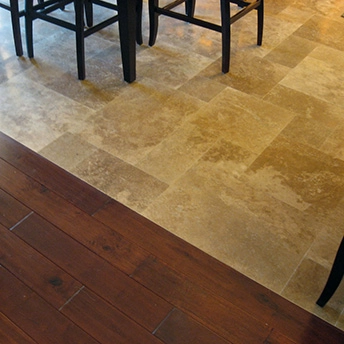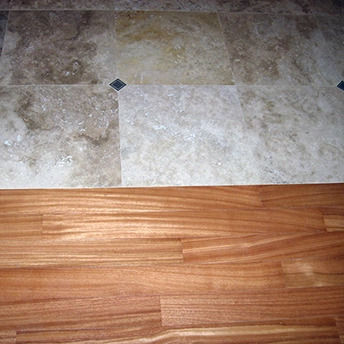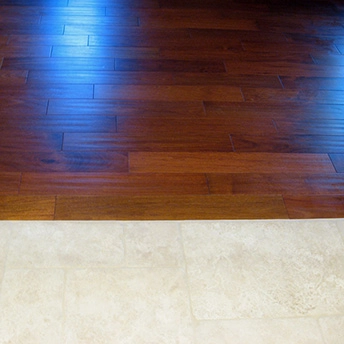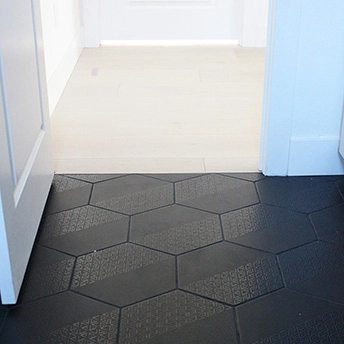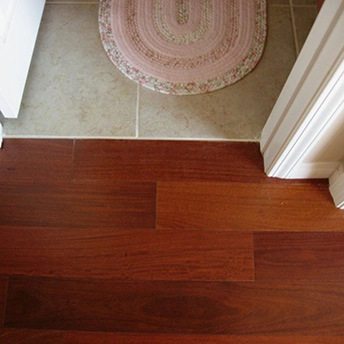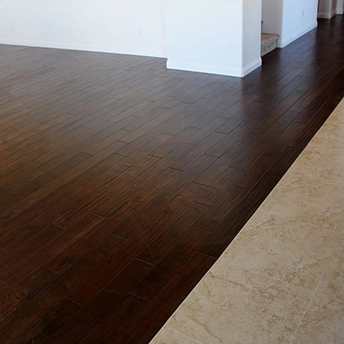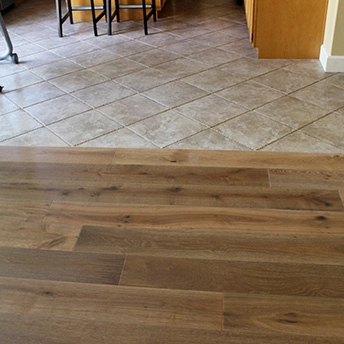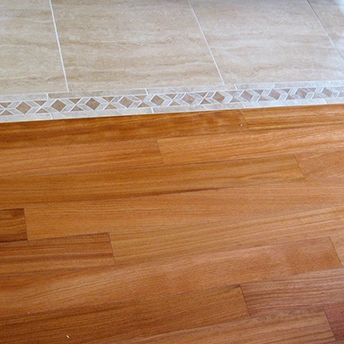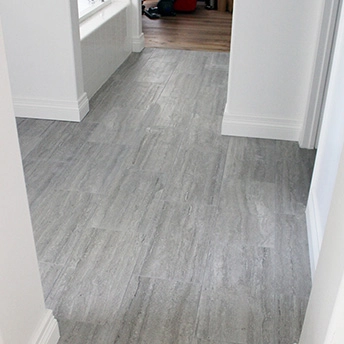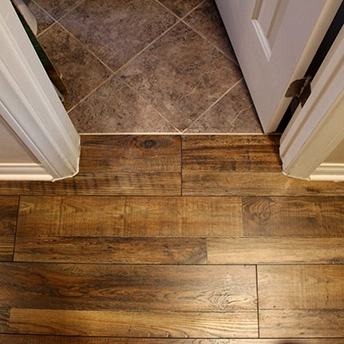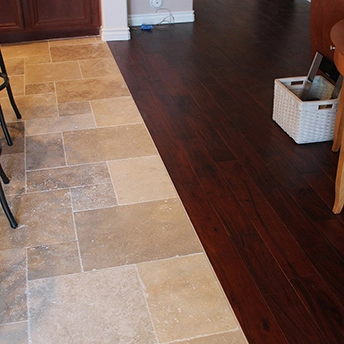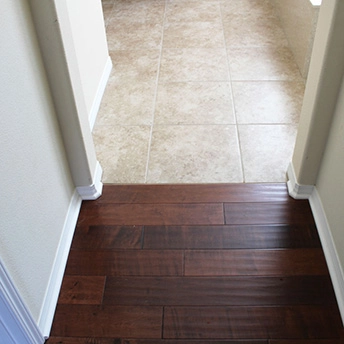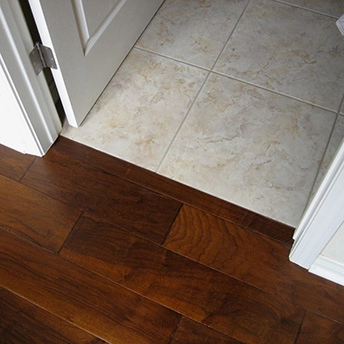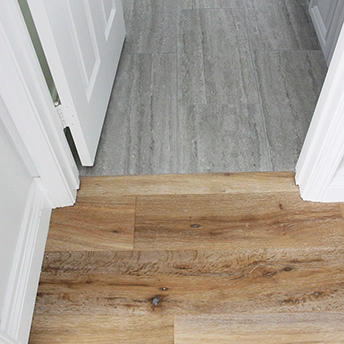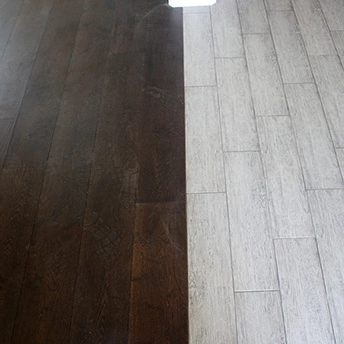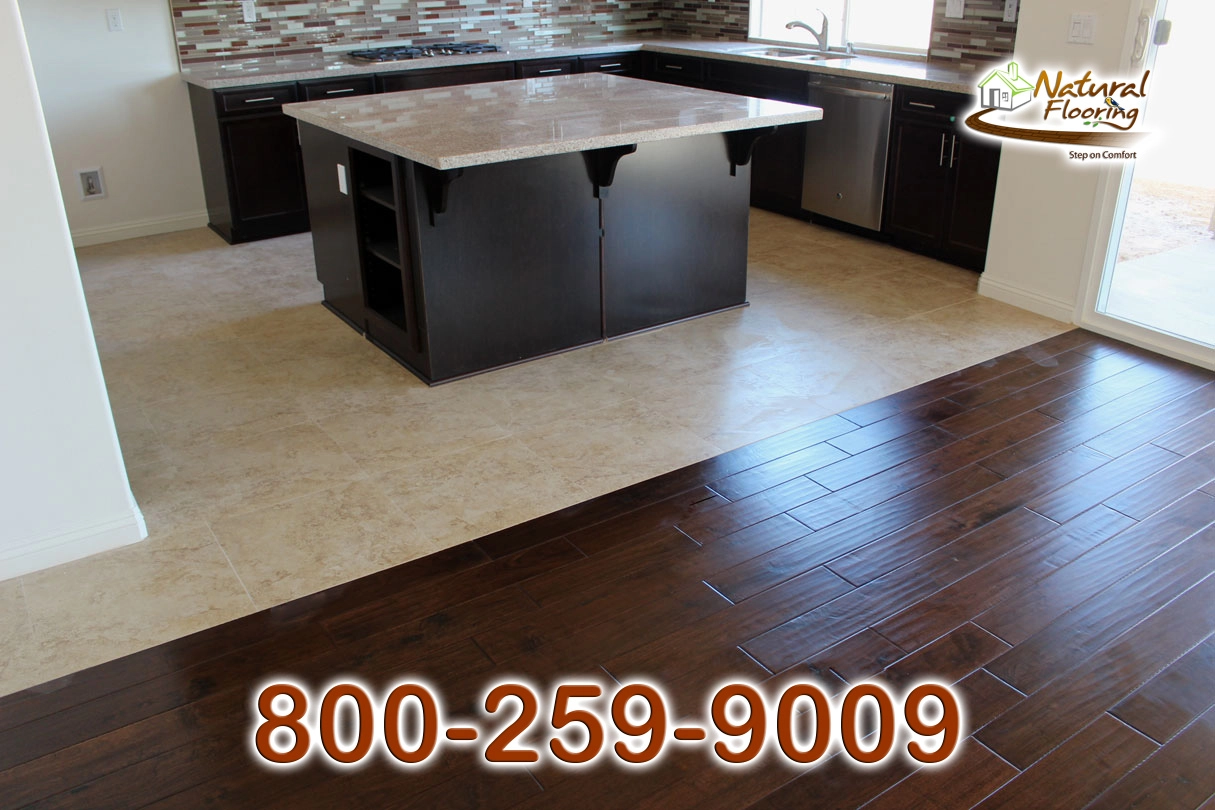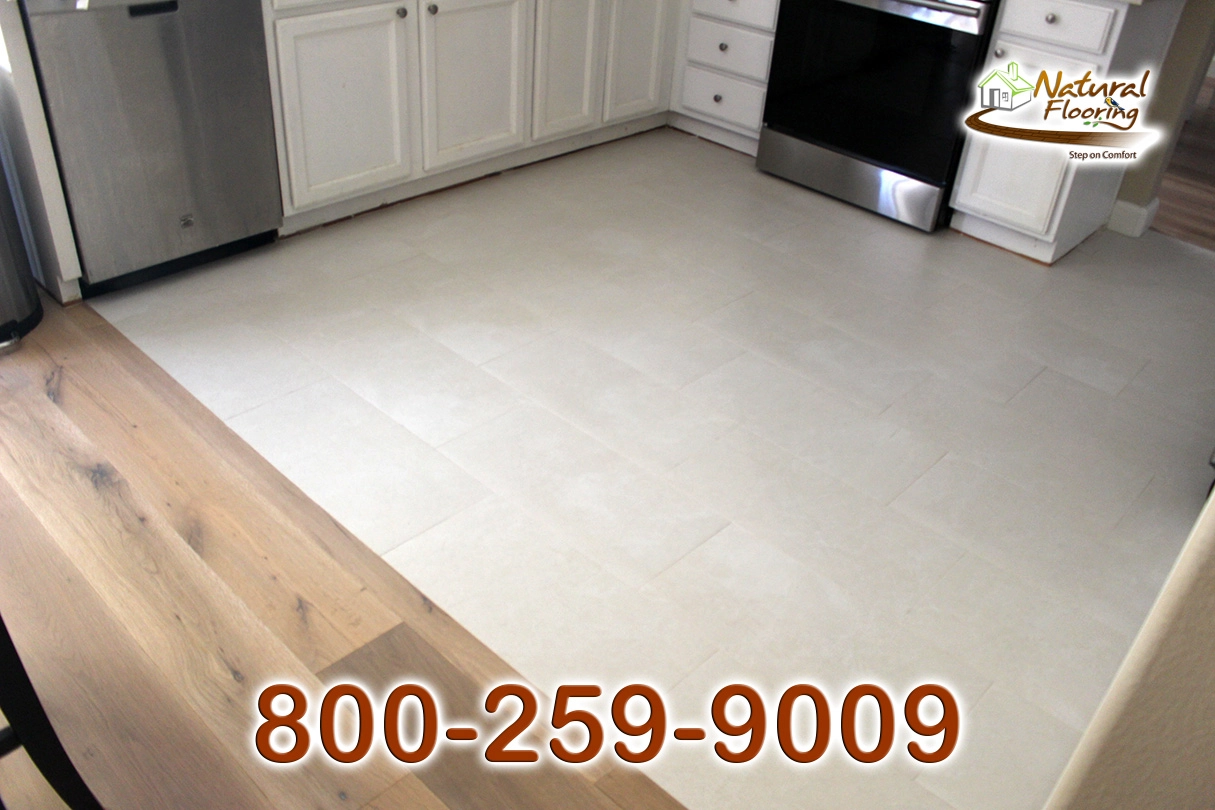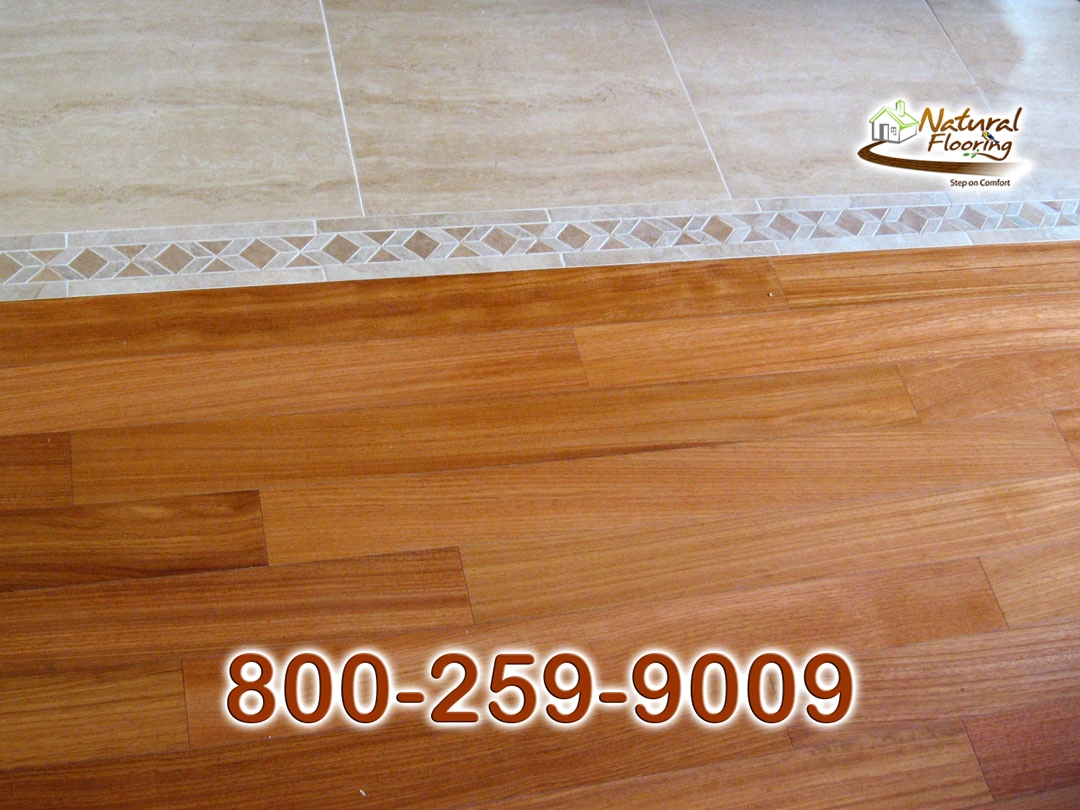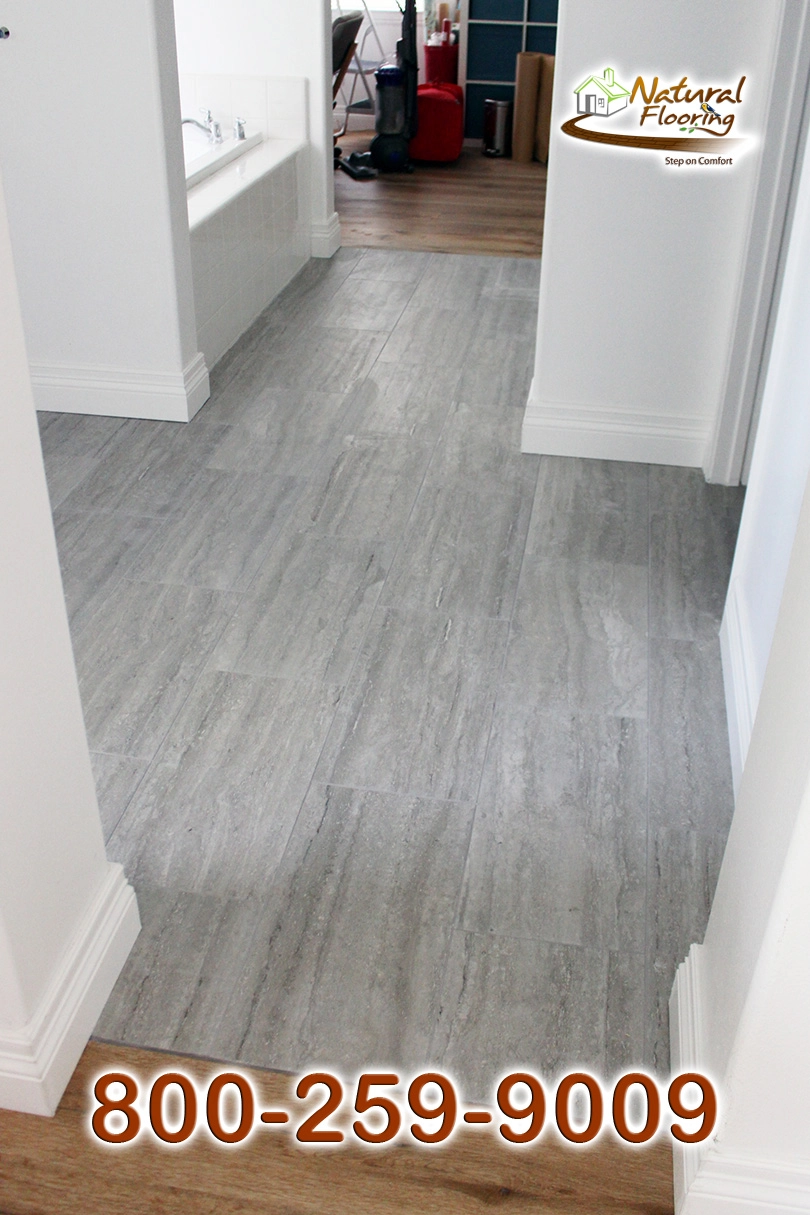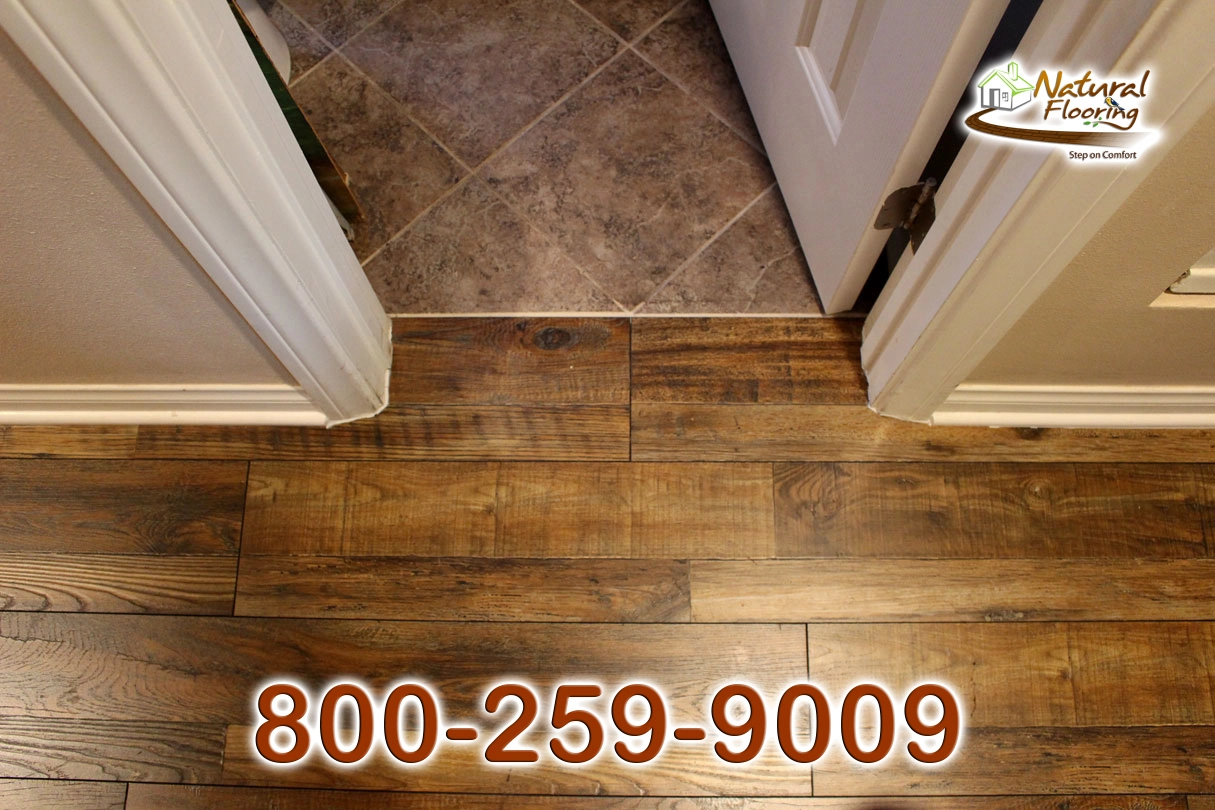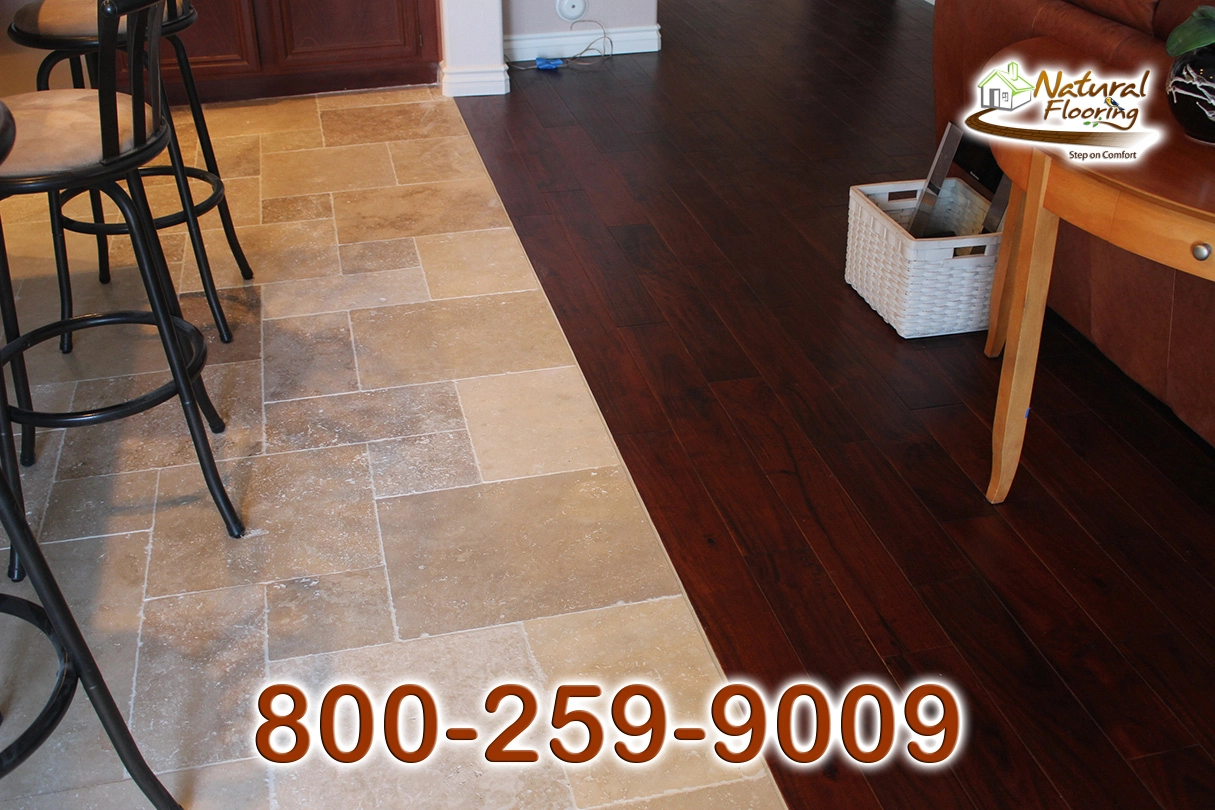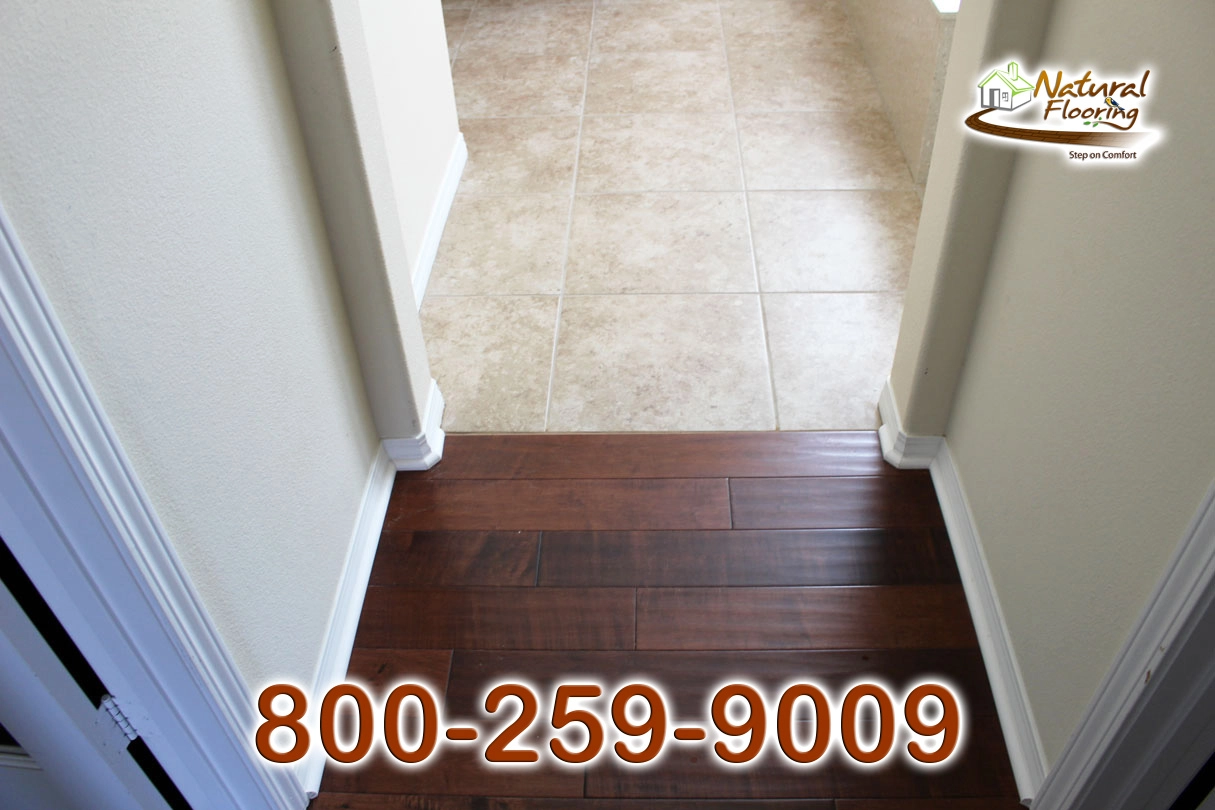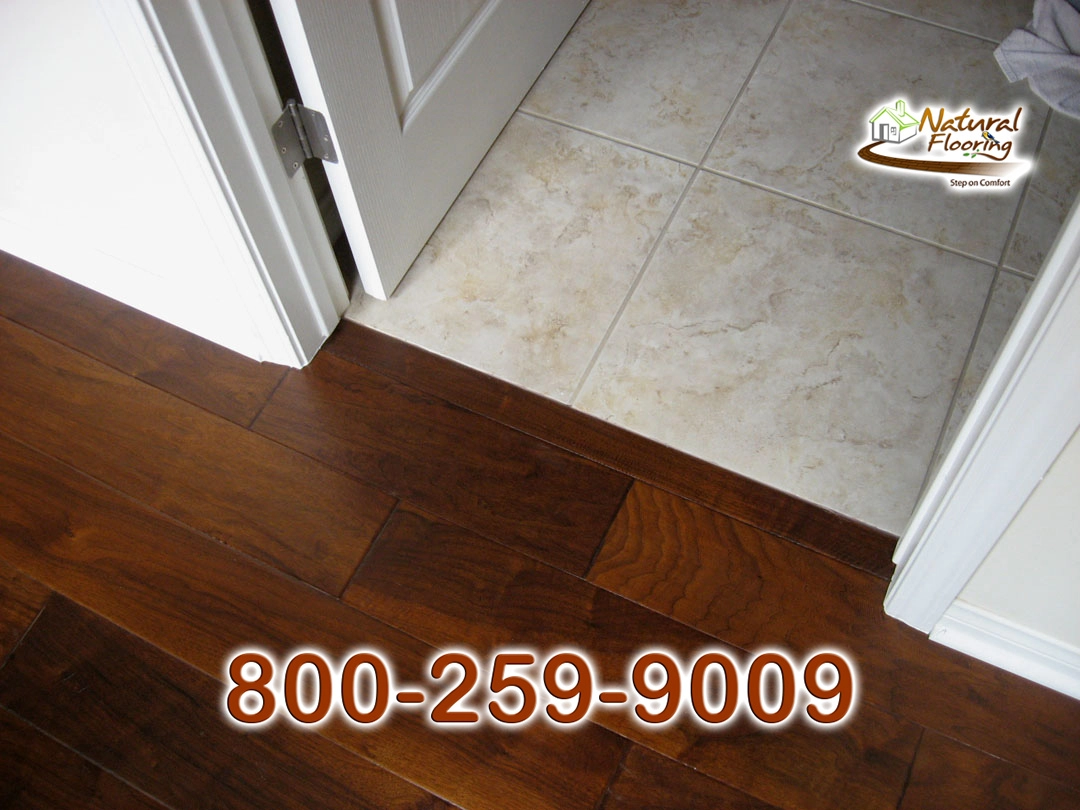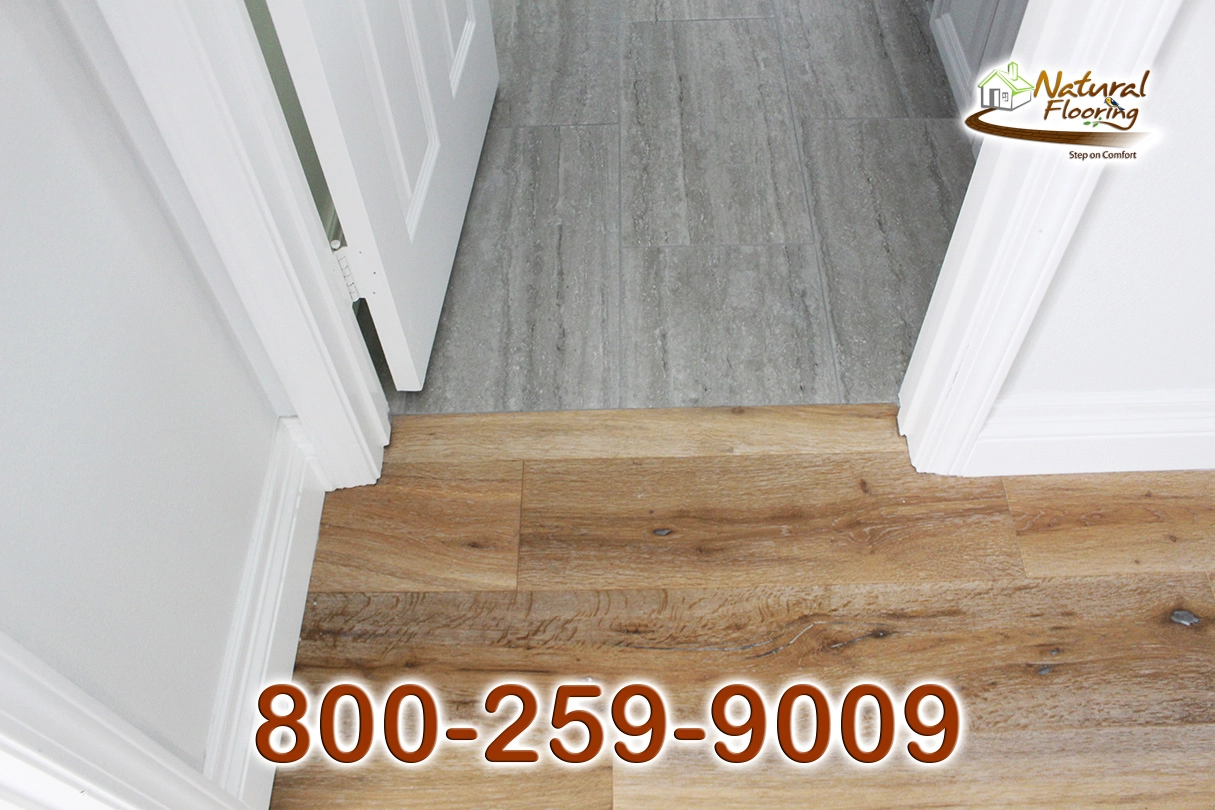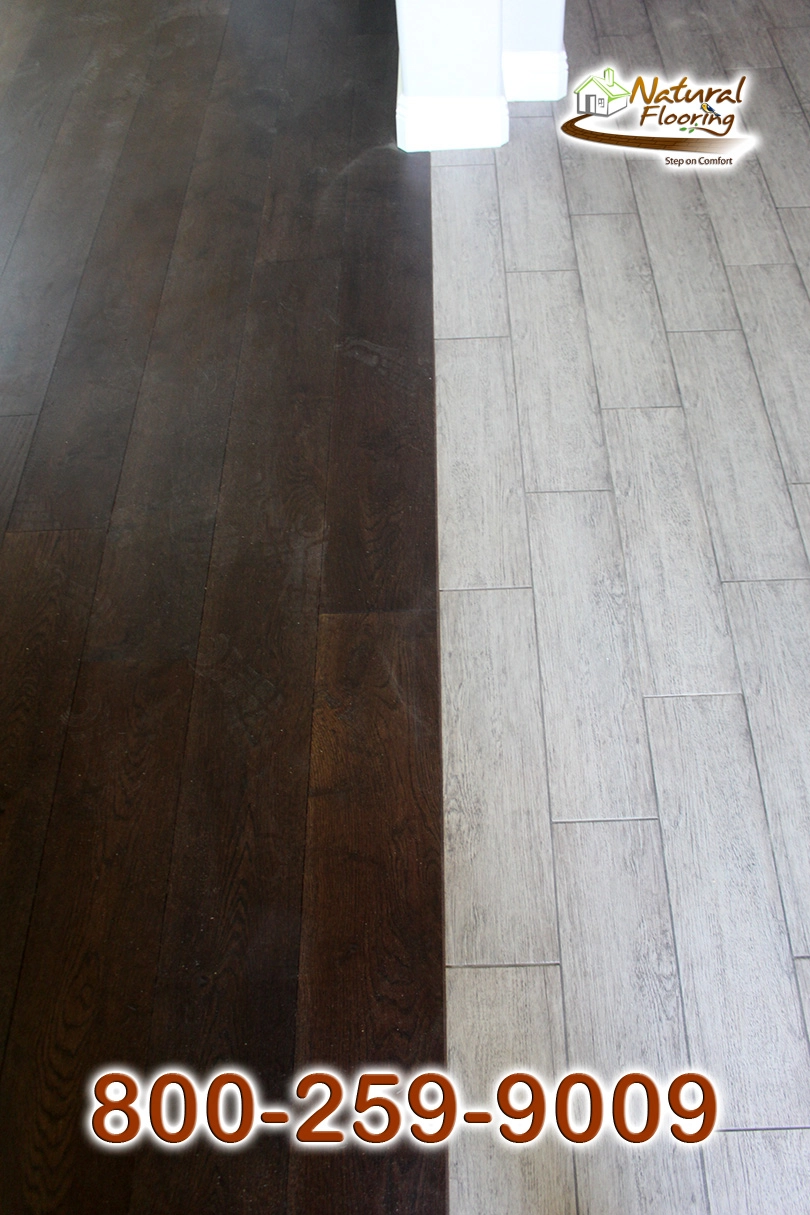
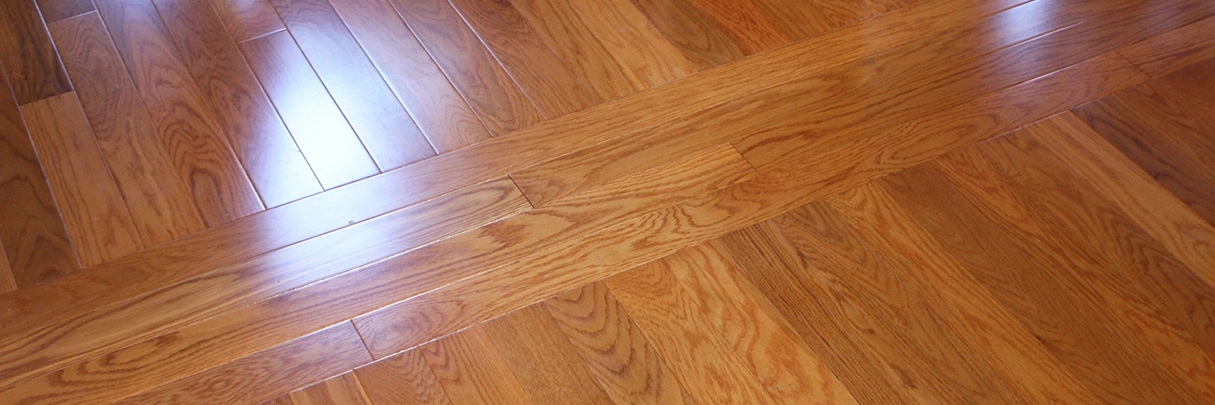
Seamlessly blending two distinct flooring materials, the transition between wood and tile flooring is carefully executed to create a smooth and visually appealing connection. Without the use of traditional transition moldings, this technique allows for a flush, continuous surface where hardwood planks meet tile or mosaic flooring in a parallel direction. The precise alignment of the materials enhances the overall aesthetic, maintaining a cohesive look between rooms while preserving the integrity of each flooring type. The craftsmanship involved ensures that the wood planks are cut to align perfectly with the tile edge, preventing noticeable gaps or height differences. This method not only enhances the beauty of the flooring but also reduce the trip hazard, risk of wear and separation over time. Perfect for open-concept spaces, this transition technique is ideal for defining different functional areas within a home while maintaining a sleek and uninterrupted flooring flow. Whether transitioning between a living area and a kitchen or a hallway and a bathroom, this meticulous installation method highlights the best of both flooring styles, offering a modern, high-end finish that integrates seamlessly into any home design.
Category:
Transition
copied!
Wood to Tile Paralleled Transition
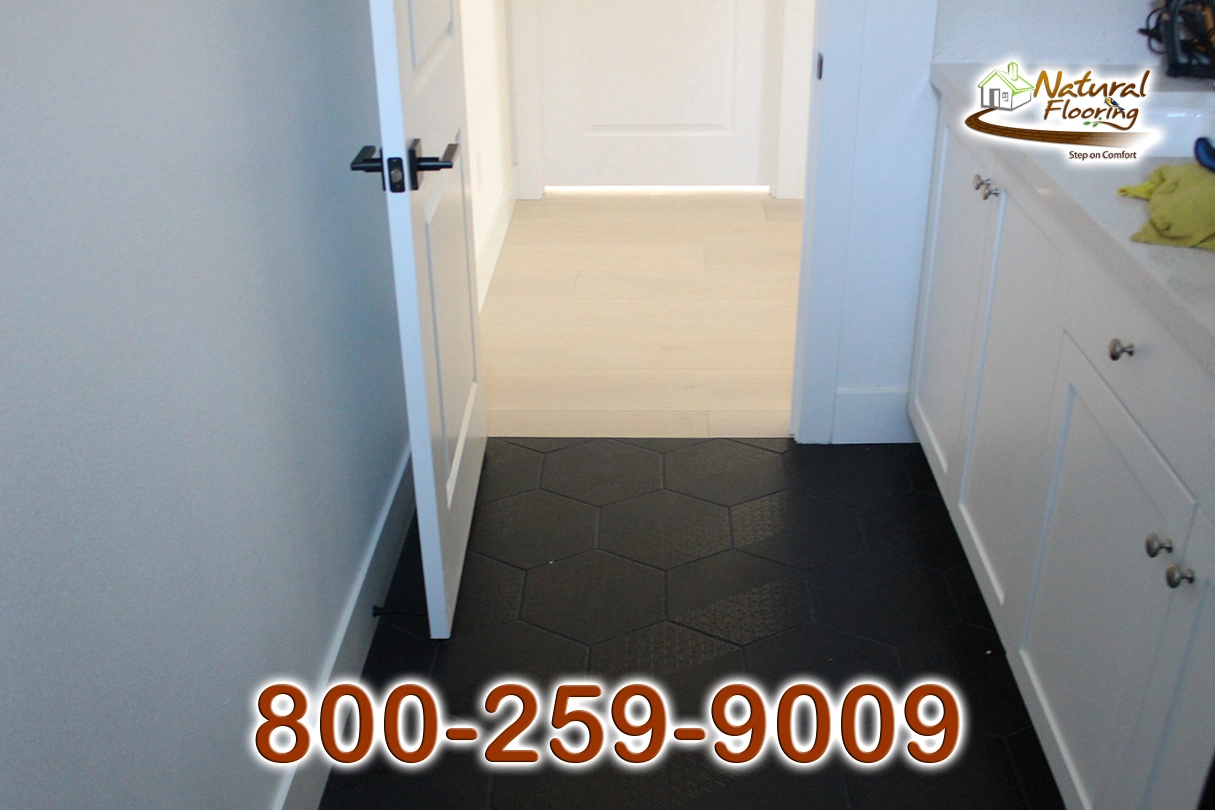
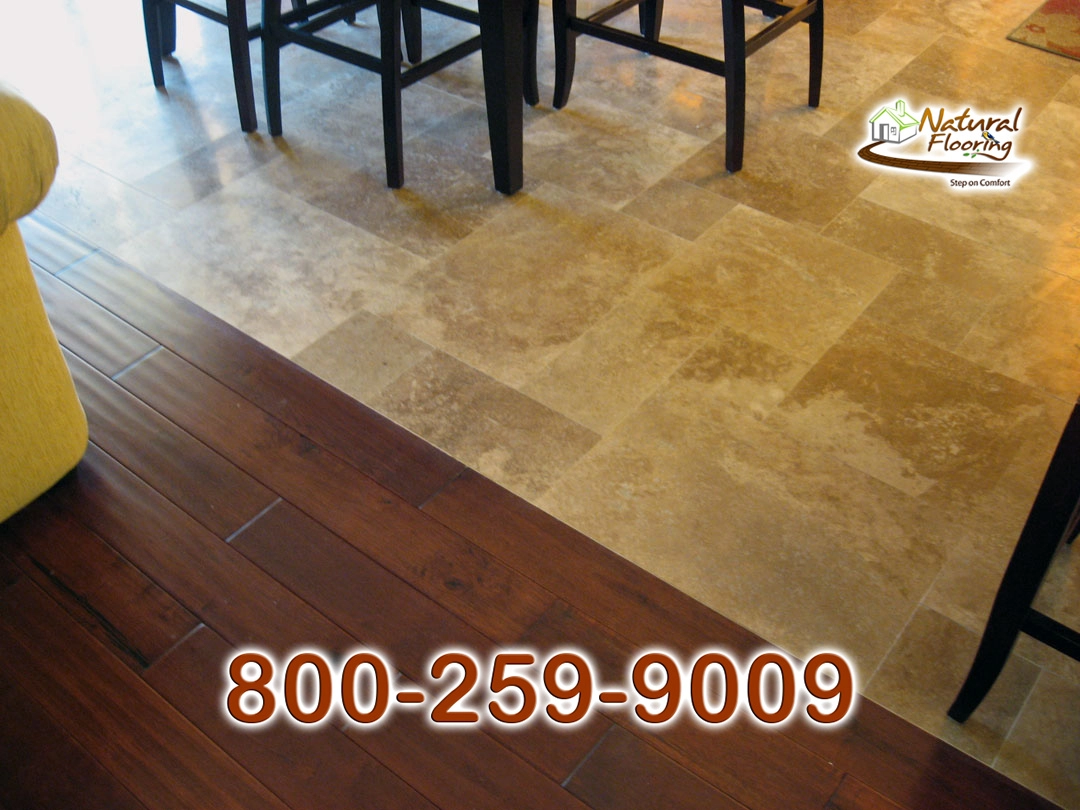
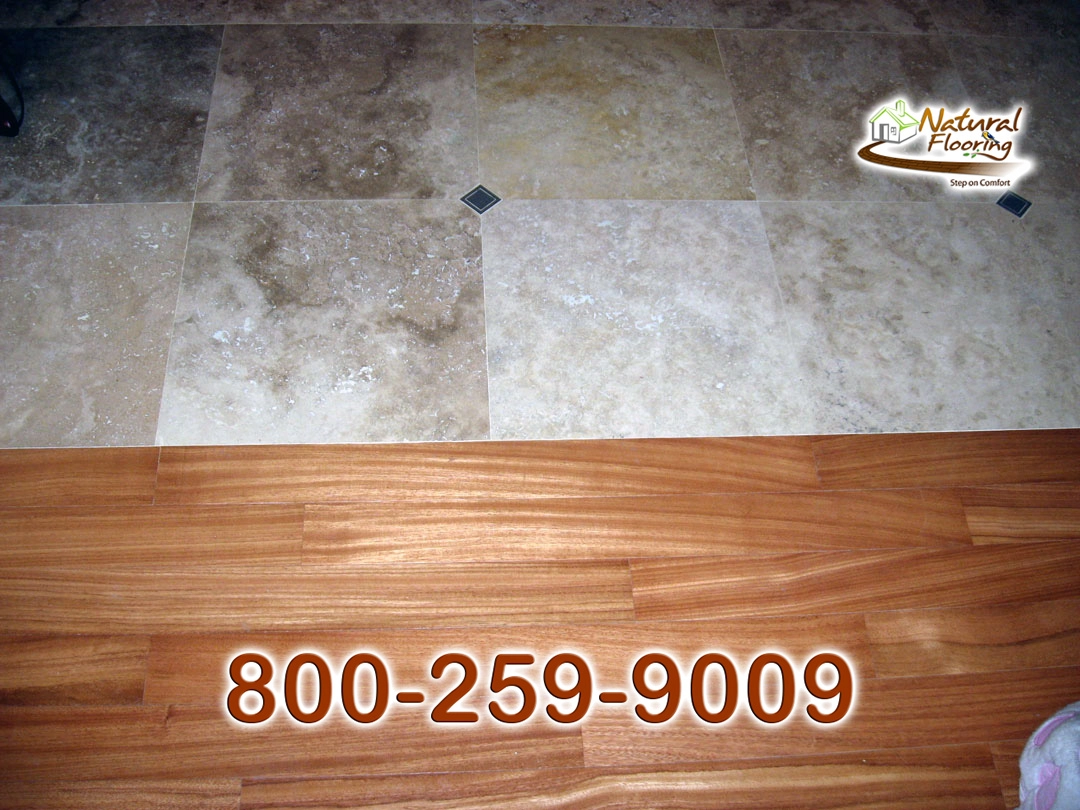
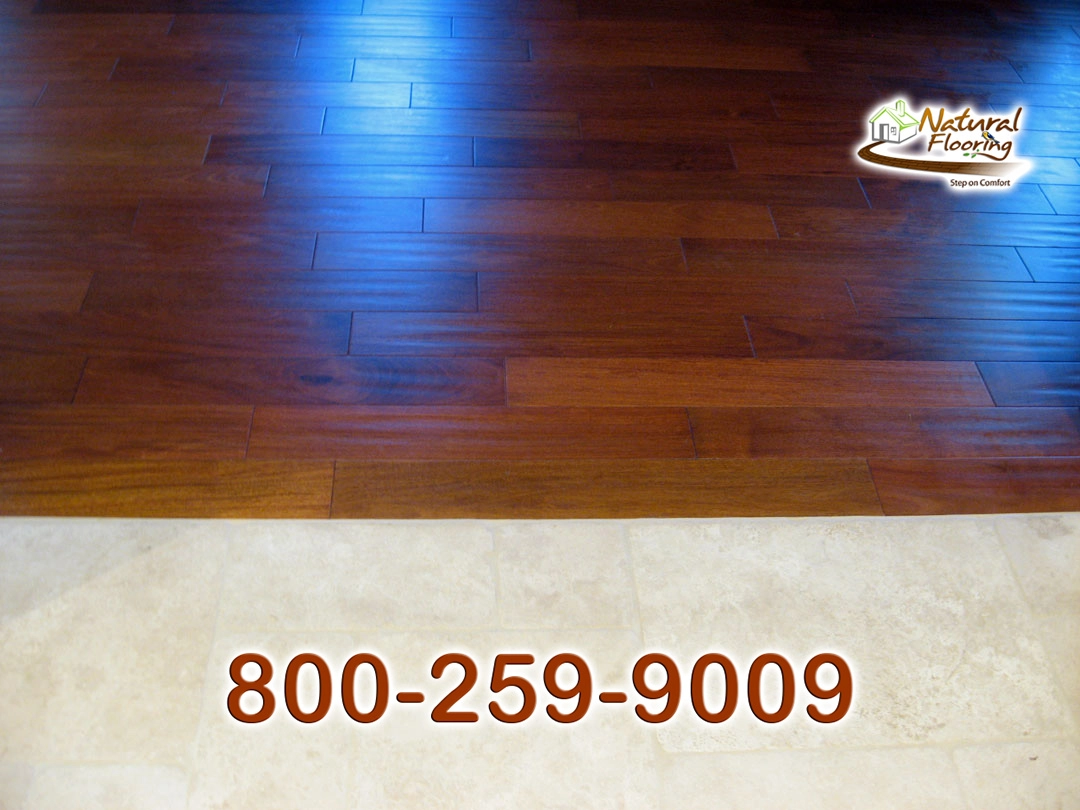
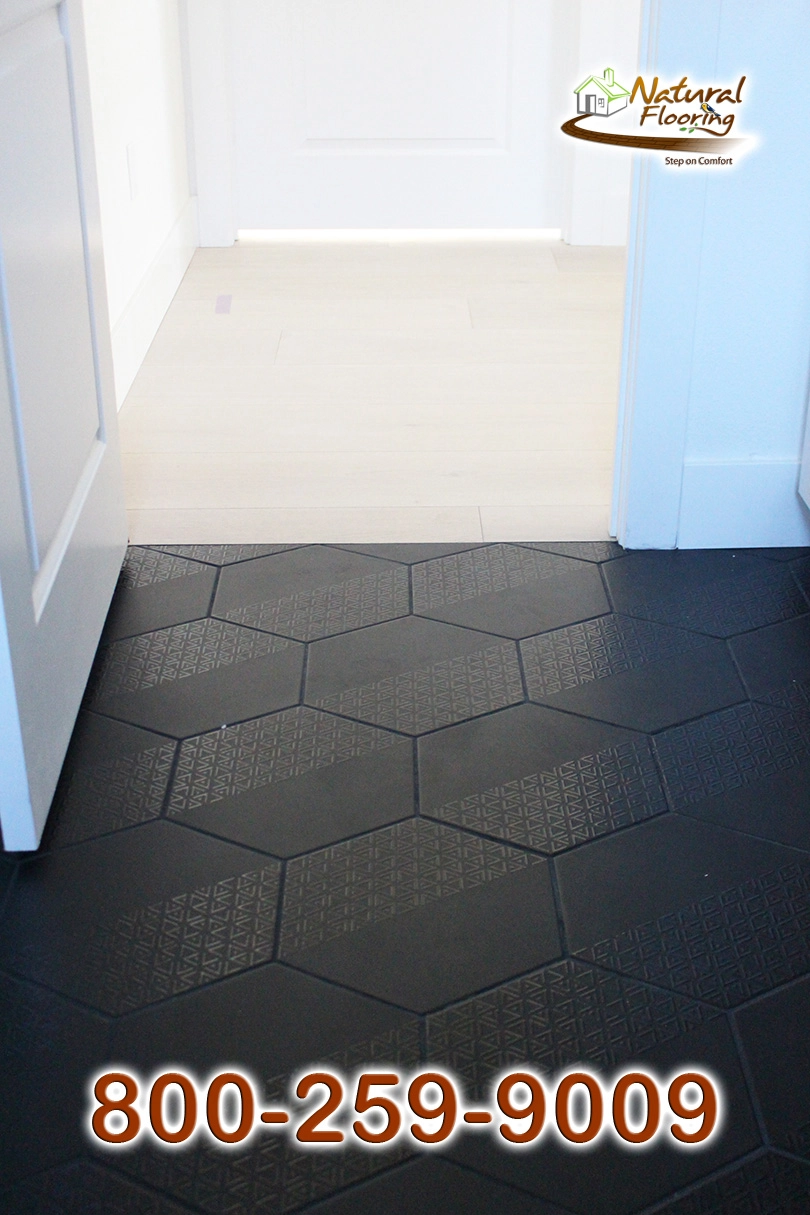
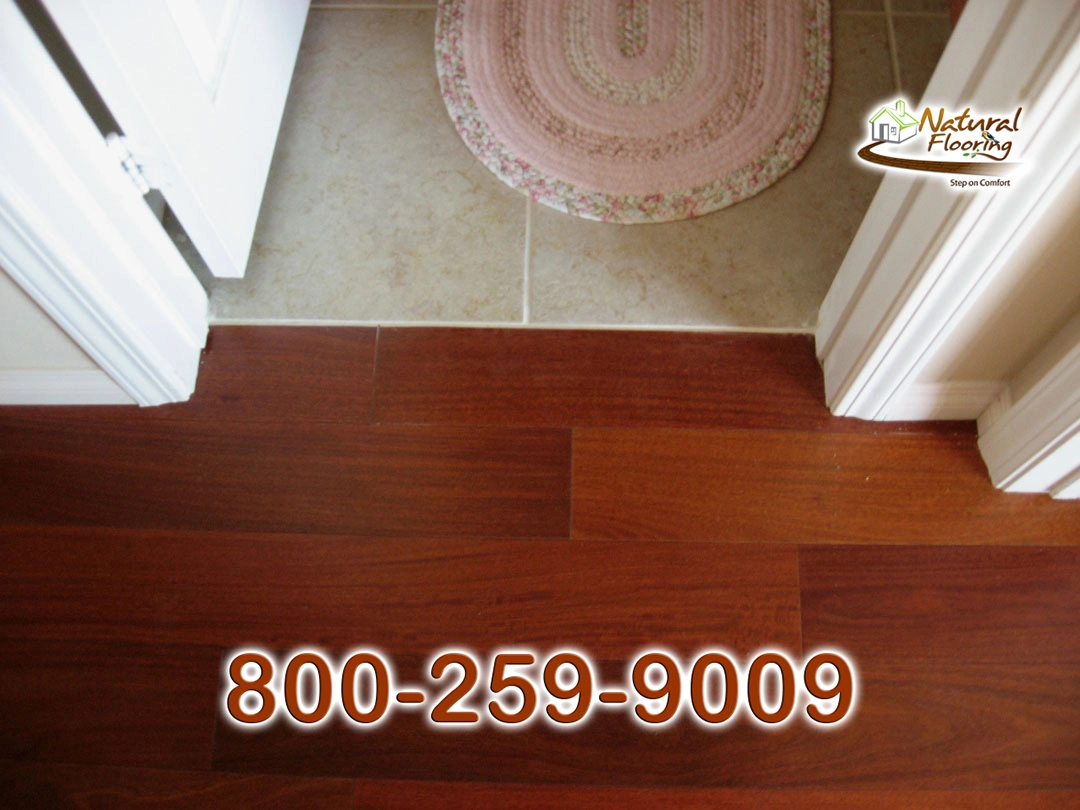
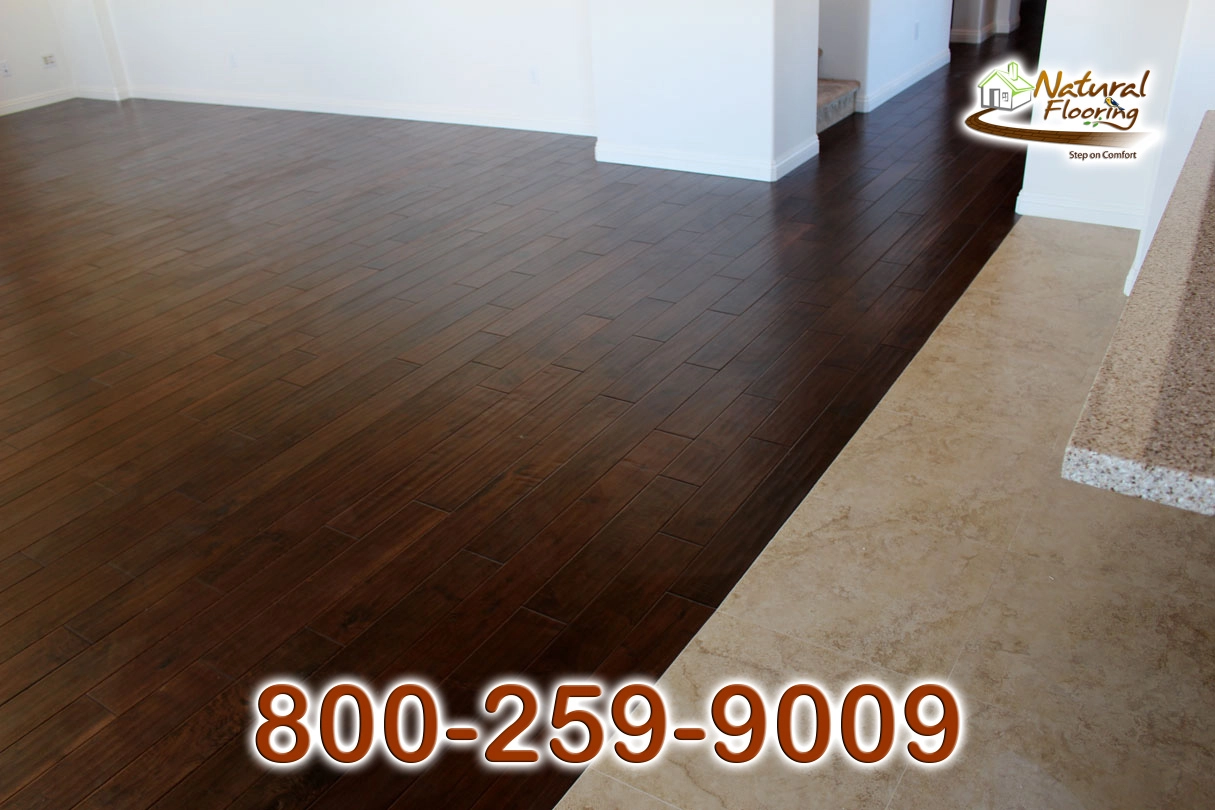
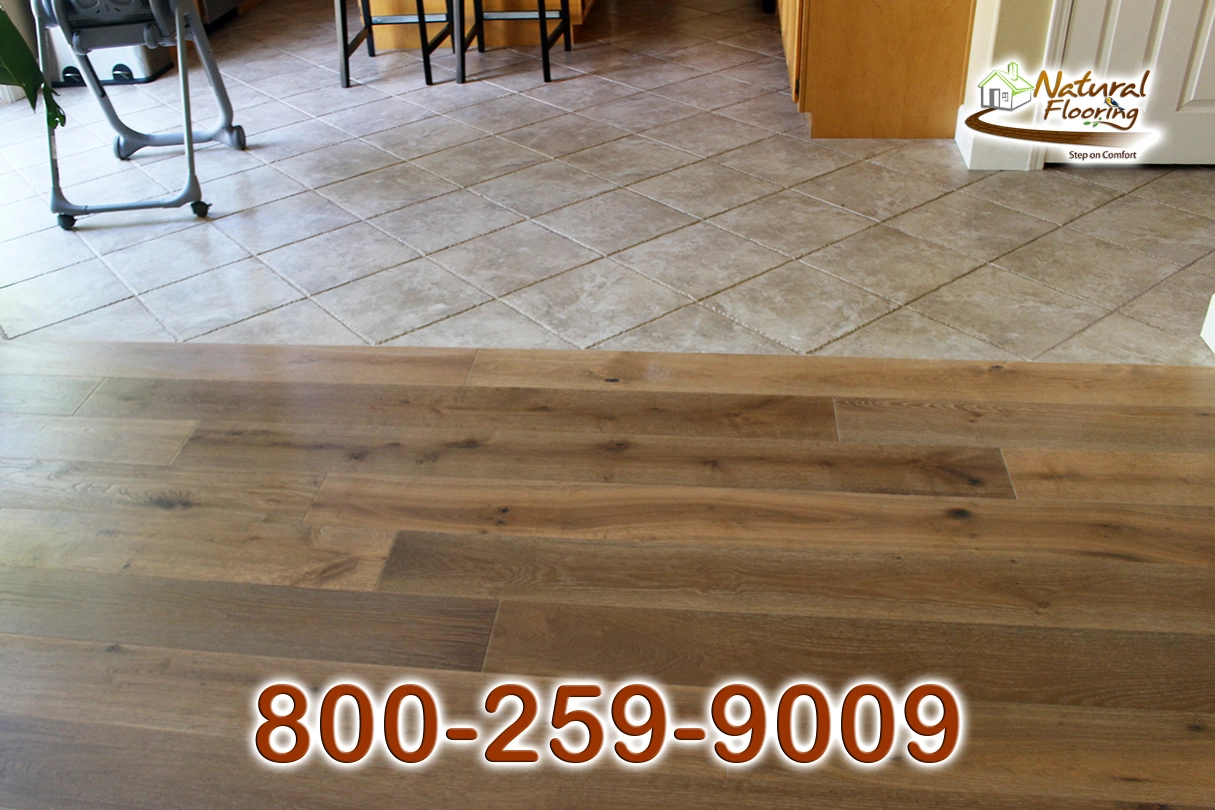
Seamlessly blending two distinct flooring materials, the transition between wood and tile flooring is carefully executed to create a smooth and visually appealing connection. Without the use of traditional transition moldings, this technique allows for a flush, continuous surface where hardwood planks meet tile or mosaic flooring in a parallel direction. The precise alignment of the materials enhances the overall aesthetic, maintaining a cohesive look between rooms while preserving the integrity of each flooring type. The craftsmanship involved ensures that the wood planks are cut to align perfectly with the tile edge, preventing noticeable gaps or height differences. This method not only enhances the beauty of the flooring but also reduce the trip hazard, risk of wear and separation over time. Perfect for open-concept spaces, this transition technique is ideal for defining different functional areas within a home while maintaining a sleek and uninterrupted flooring flow. Whether transitioning between a living area and a kitchen or a hallway and a bathroom, this meticulous installation method highlights the best of both flooring styles, offering a modern, high-end finish that integrates seamlessly into any home design.